Home Trekking Everest Region Everest Base Camp Trek – 14 Days
Circuit Grade: Hard 14 Days / 13 Nights Max Alt: 5,545 m / 18,192 ft (Kala Patthar)

Everest Base Camp Trek – 14 Days

The world's most iconic Himalayan journey. Walk alongside veteran Sherpa guides through Sagarmatha National Park, alpine monasteries, and the Khumbu Glacier to Mount Everest Base Camp (5,364 m) and Kala Patthar (5,545 m).

Everest Base Camp Trek – 14 Days
Trek Duration
14 Days / 13 Nights
Maximum Altitude
5,545 m / 18,192 ft (Kala Patthar)
Start & End Point
Lukla (Tenzing-Hillary Airport)
Support Ratio
1 Guide:4 & 1 Porter:2 (10-12kg/trekker)
Prime Seasons
March–May & September–November

Overview

Among the most popular and classic trekking destinations in the world, the Everest Base Camp Trek offers an incredible opportunity for trekkers to experience the foothills of some of the world’s highest mountains: Mount Everest (8,848.86 m), Mt. Lhotse (8,516 m), Mt. Makalu (8,485 m), Mt. Cho Oyu (8,188 m), Mt. Nuptse (7,861 m), Mt. Pumori (7,161 m), Mt. Ama Dablam (6,812 m), Mt. Thamserku (6,623 m) and many other beautiful peaks found in Nepal. This trek also allows you to experience authentic local culture and enjoy the friendly, warm welcome given by the indigenous Sherpa communities.

The 14-day Everest Base Camp trek is one of the most balanced packages available, giving trekkers a comfortable pace and safe acclimatization. This itinerary is ideal for those wishing to enjoy a full Himalayan adventure in a sensible timeframe. The expedition begins with a stunning 35-minute mountain flight from Kathmandu or Manthali to Lukla Airport (2,845 m). From Lukla, you will hike gently along the Dudh Koshi river through rhododendron and pine forests to Phakding (2,610 m). On the second trekking day, you will head to Namche Bazaar (3,440 m), the bustling Sherpa capital, where you will spend an essential acclimatization day exploring the local culture and hiking up to Hotel Everest View (3,880 m).

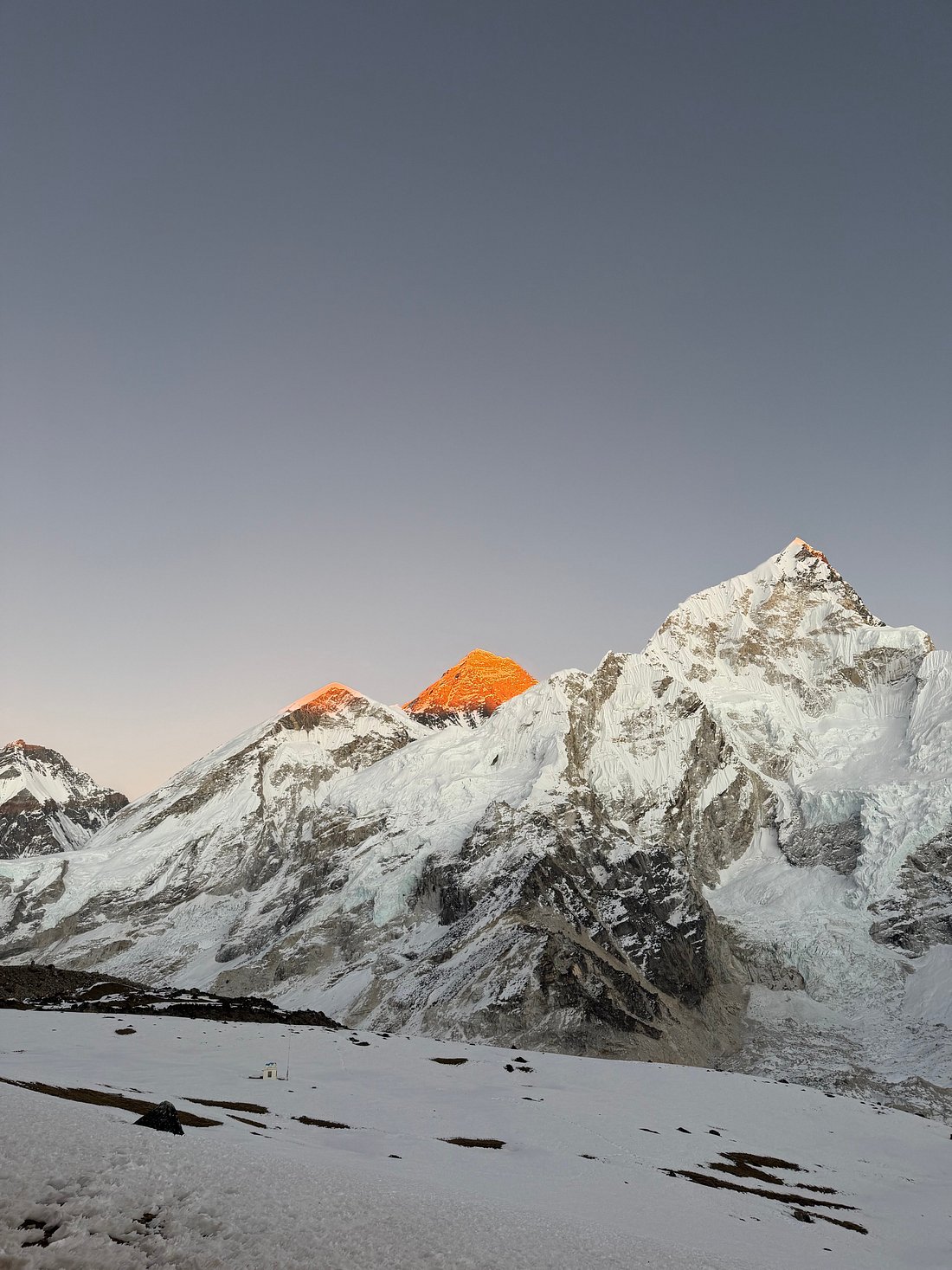
From Namche Bazaar, the trail continues to Tengboche (3,860 m), framed by spectacular vistas of Ama Dablam and home to the famous Tengboche Monastery. You will continue onward to Dingboche (4,410 m) for your second acclimatization milestone, climbing high on the Nangkartshang Peak ridge (5,083 m). Finally, we ascend toward Lobuche (4,910 m) and Gorak Shep (5,190 m) before celebrating our arrival at Everest Base Camp (5,364 m) beside the legendary Khumbu Glacier and Icefall. The following dawn brings the iconic hike to Kala Patthar (5,545 m / 18,192 ft) for an unforgettable sunrise over Mount Everest, Nuptse, and Lhotse.

Highlights of Everest Base Camp Trek

  • Stand at the foot of the world's highest peak at Everest Base Camp (5,364 m), the historic staging ground for global mountaineering expeditions.
  • Experience an exhilarating mountain flight into Lukla's Tenzing-Hillary Airport, the gateway to the Khumbu Himalayas.
  • Explore Sagarmatha National Park, a UNESCO World Heritage Site bursting with rich Himalayan alpine flora and wildlife.
  • Cross iconic suspension bridges suspended high above the roaring Dudh Koshi River, including the famous Hillary Suspension Bridge (Larja Dovan).
  • Discover Namche Bazaar (3,440 m), the amphitheater-shaped cultural, trading, and Sherpa heritage capital.
  • Enjoy panoramic vistas of Mt. Everest, Ama Dablam, and Thamserku from the terrace of Hotel Everest View (3,880 m).
  • Visit the sacred Tengboche Monastery (3,860 m), the largest and most spiritually revered Buddhist monastery in the Everest region.
  • Trek alongside the massive Khumbu Glacier and marvel at the colossal seracs of the Khumbu Icefall.
  • Summit Kala Patthar (5,545 m) and Nangkartshang Peak (5,083 m) for 360-degree sunrise panoramas over Mt. Everest and neighboring 8,000-meter giants.
  • Witness sweeping vistas of Everest (8,848.86 m), Lhotse (8,516 m), Makalu (8,485 m), Cho Oyu (8,188 m), Nuptse (7,861 m), Pumori (7,161 m), and Ama Dablam (6,812 m).

Elevation & Acclimatization Curve

Trail elevation stages mapped by expedition check-points.

Peak: 5,545m Start: 2,610m
1,500m 2,500m 3,500m 4,500m 5,500m Day 2 2,610m Scenic flight to... Day 3 3,440m Phakding to Namc... Day 1 1,400m Arrival at Tribh... Day 4 3,880m Acclimatization... Day 5 3,860m Namche Bazaar to... Day 6 4,410m Tengboche to Din... Day 7 5,083m Acclimatization... Day 8 4,910m Dingboche to Lob... Day 9 5,364m Everest Base Cam... ★ 5,545m Day 10 5,545m Early morning su... Day 11 3,440m Pheriche down to... Day 12 2,840m Namche Bazaar ba... Day 13 1,400m Scenic flight fr... Day 14 1,400m Farewell and tra...

Why Book with Neepa Adventure?

1. Local Knowledge & Authentic Experiences

We are a Nepal-based adventure operator with deep roots in Himalayan communities, ensuring genuine cultural immersion.

2. Personalized Trekking Itineraries

We tailor pacing, dietary needs, and logistics to match your physical fitness and mountain goals.

3. Licensed Veteran Sherpa Guides

Government-certified alpine guides with wilderness first aid training, oximeter checks, and years of high-altitude experience.

4. Safety-First Acclimatization

Two built-in acclimatization rest days (Namche & Dingboche) with gradual ascent limits and comprehensive emergency protocols.

5. Responsible & Sustainable Tourism

Fair wages, insured porters, weight limit compliance (max 12kg/guest), and zero single-use plastic initiatives.

6. Transparent & Fair Pricing

No hidden fees. Every inclusion, permit, flight, and meal tier is explicitly documented before you confirm.

7. Small Groups & Personal Attention

Capped group sizes ensure meaningful connections and personalized guidance on the trail.

8. Genuine Nepali Hospitality

You are family from arrival to farewell. Experience authentic Sherpa warmth and lifelong mountain memories.

Departures & Availability

Guaranteed group departures and flexible alternate-day departures with instant reservation.

No fixed departures for this selection. Custom dates are available on request.

Guaranteed Alternate Dates
–
Days Circuit • Lukla (Tenzing-Hillary Airport)
$ USD

Cost Details & Trek Logistics

Complete pricing breakdown, mandatory inclusions, logistical cover, and transparent deposit policies.

What Is Fully Covered

Accommodation

  • 2 Nights twin-sharing/double room in 3-star hotel in Kathmandu (Kantipur Village or Kathmandu Business Hotel) with breakfast.
  • 11 Nights best available twin-sharing teahouse/lodge accommodation during the trek in the Everest Region (attached bathrooms in Lukla, Phakding & Namche).

Transportation & Domestic Flights

  • Private vehicle airport transfers for all international and domestic arrivals/departures in Kathmandu.
  • Round-trip flight tickets between Kathmandu/Ramechhap and Lukla.
  • Shared comfortable tourist vehicle transfer between Kathmandu and Manthali/Ramechhap (during peak seasonal operations).

Meals & Refreshments

  • Welcome or Farewell traditional dinner with live cultural dance show at a typical Nepalese restaurant in Kathmandu.
  • Full board meals throughout the 11-day trek: Breakfast, Lunch, and Dinner with tea or coffee included at each meal.
  • Fresh seasonal fruit platter served each evening after dinner on the mountain trail.
  • Complimentary water purification tablets for safe hydration throughout the expedition.

Guide, Porters & Mountain Staff

  • Professional, government-licensed English-speaking Sherpa trekking guide with wilderness first aid certification.
  • Experienced assistant guides assigned for larger groups (over 6 trekkers).
  • Dedicated porter service (1 porter for 2 trekkers, carrying a strict maximum of 10–12 kg per trekker).
  • All guide and porter expenses fully covered: salary, insurance, food, lodge accommodation, flight tickets, and alpine equipment.

Permits & Administrative Fees

  • Sagarmatha (Everest) National Park Conservation Entry Permit.
  • Khumbu Pasang Lhamu Rural Municipality Regional Entry Permit.
  • TIMS (Trekkers' Information Management System) registration card.
  • All government taxes, value-added taxes (VAT), and official paperwork fees.

Safety, Medical & Takeaway Benefits

  • Comprehensive medical first aid kit carried by the guide, including daily Pulse Oximeter saturation and heart-rate monitoring.
  • Neepa Adventure official waterproof topographic trekking route map.
  • Expedition-grade high-altitude duffel bag provided for the trek (if requested).
  • Official trip completion certificate signed by your expedition leader and commemorative souvenir.

What Trekkers Cover

Flights, Visa & International Travel

  • International airfare and departure taxes to/from Tribhuvan International Airport (Kathmandu).
  • Nepal entry tourist visa fee (USD 30 for 15 days, USD 50 for 30 days, or USD 125 for 90 days — payable in cash upon arrival).

Travel Insurance & Emergency Evacuation

  • Mandatory travel and medical insurance policy covering high-altitude alpine trekking (up to 6,000m), emergency search and rescue, and helicopter evacuation.

Extra Accommodation & Meals

  • Additional hotel nights or meals in Kathmandu due to early arrival, late departure, or early return from the trail for any reason.
  • Lunch and dinner in Kathmandu outside of the included welcome/farewell dinner.

Personal Trail Expenses

  • Personal trekking gear, clothing, boots, and personal medications.
  • Beverages on the trail: mineral water bottles, soft drinks, specialty barista coffee, and alcoholic drinks.
  • Teahouse extras: hot showers ($3–$6), electronic device battery charging ($2–$5), and Wi-Fi access cards (Everest Link).
  • Extra baggage charges on Lukla domestic flights exceeding the standard 15 kg limit (10 kg check-in + 5 kg hand carry).

Tipping & Financial Surcharges

  • Gratuities and tips for guides, porters, and drivers (customary industry practice in Nepal).
  • 3.5% credit or debit card merchant surcharge fee when settling invoices via card.

Expedition Add-on Options

Customize your journey with helicopter upgrades, private guides, or alpine gear rentals.

Helicopter Return Flight (Gorak Shep to Lukla/Kathmandu)

Popular

Skip the 3-day return hike! Fly directly from Gorak Shep / Everest Base Camp by luxury helicopter with breathtaking aerial views of the Khumbu Glacier, Ama Dablam, and peaks.

$950 / per person

Kathmandu to Lukla Scenic Helicopter Transfer

Popular

Avoid the 5-hour highway drive to Manthali/Ramechhap during peak seasons. Board an exclusive helicopter directly from Tribhuvan Domestic Airport in Kathmandu to Lukla.

$600 / per person

Private Sherpa Guide Upgrade

Popular

Upgrade to a dedicated personal Sherpa guide exclusively for your party, providing custom pace management, cultural insights, and continuous alpine monitoring.

$350 / per person

Dedicated Personal Porter (Max 25 kg)

Hire an exclusive private porter solely for yourself rather than sharing, allowing extra photography equipment, camera gear, or heavier luggage up to 25 kg.

$280 / per group

Luxury Teahouse / Private Room Upgrade

Upgrade to private rooms with attached bathrooms, heated mattresses, and premium teahouse facilities in Lukla, Phakding, Namche Bazaar, and Dingboche where available.

$250 / per person

Extra Night Hotel Accommodation in Kathmandu (3-Star)

Pre-trip or post-trip additional nights at our partner 3-star boutique hotel in Thamel, including complimentary buffet breakfast and luggage storage.

$40 / per person

Professional Photography Expedition Package

A dedicated photographer / guide captures high-resolution portraits and cinematic moments against Mt. Everest, Ama Dablam, and the Khumbu Icefall.

$300 / per group

High-Altitude Training & Acclimatization Prep Session

A 2-hour pre-trek orientation in Kathmandu covering hyperbaric chamber usage, AMS symptom recognition, gear fitting, and pulse oximeter calibration.

$120 / per person

The 14 Days / 13 Nights Itinerary

Comprehensive daily stages, trail elevations, trekking hours, and lodging stops.

2,610m 35-min flight, 3–4 hrs trek 8 km (4.3 miles)
Lodging: Standard Teahouse / Guesthouse
Meals: Breakfast, Lunch, Dinner

3,440m 5–6 hrs 12.3 km (7.6 miles)
Lodging: Standard Teahouse / Guesthouse
Meals: Breakfast, Lunch, Dinner

1,400m 30–45 min drive 6 km (3.7 miles)
Lodging: 3-Star Hotel (Kantipur Village / Kathmandu Business Hotel)
Meals: Welcome Dinner

3,880m 4–5 hrs (round trip) 6.2 km (3.8 miles)
Lodging: Standard Teahouse / Guesthouse
Meals: Breakfast, Lunch, Dinner

3,860m 5–6 hrs 10.7 km (6.6 miles)
Lodging: Standard Teahouse / Guesthouse
Meals: Breakfast, Lunch, Dinner

4,410m 5–6 hrs 10.8 km (6.7 miles)
Lodging: Standard Teahouse / Guesthouse
Meals: Breakfast, Lunch, Dinner

5,083m 4–5 hrs 5.2 km (3.2 miles)
Lodging: Standard Teahouse / Guesthouse
Meals: Breakfast, Lunch, Dinner

4,910m 5–6 hrs 8.8 km (5.4 miles)
Lodging: Standard Teahouse / Guesthouse
Meals: Breakfast, Lunch, Dinner

5,364m 8–9 hrs 11.5 km (7.1 miles)
Lodging: Standard Teahouse / Guesthouse
Meals: Breakfast, Lunch, Dinner

5,545m 8–9 hrs 17.2 km (10.6 miles)
Lodging: Standard Teahouse / Guesthouse
Meals: Breakfast, Lunch, Dinner

3,440m 7–8 hrs 19.7 km (12.2 miles)
Lodging: Standard Teahouse / Guesthouse
Meals: Breakfast, Lunch, Dinner

2,840m 7–8 hrs 19.9 km (12.3 miles)
Lodging: Standard Teahouse / Guesthouse
Meals: Breakfast, Lunch, Dinner

1,400m 35-min flight, 30-min drive 138 km by air
Lodging: 3-Star Hotel in Thamel
Meals: Breakfast, Farewell Dinner

1,400m 30-min drive 6 km (3.7 miles)
Lodging: Departure Day (No lodge)
Meals: Breakfast

Packing List & Gear Checklist

Mandatory alpine clothing layers, footwear, personal medicine, and trail equipment.

of 12 packed
  • Backpack (50–65L for porter duffel) Required

    Main duffel or backpack carried by your porter (max 10-12kg).

  • Daypack (25–35L) Required

    For personal items: water, rain jacket, sunscreen, camera, valuables.

  • Trekking Boots Required

    Sturdy, waterproof, ankle-support boots (well broken-in prior to trip).

  • Camp / Teahouse Shoes

    Light sneakers, sandals, or down booties for relaxing indoors in the evening.

  • Trekking Poles (1 Pair) Required

    Collapsible, shock-absorbing poles to save knees on descents.

  • Reusable Water Bottles (2x 1L) Required

    Wide-mouth Nalgene bottles that can withstand boiling hot water.

  • Dry Bags / Ziploc Pouches

    Waterproof liners to protect dry clothing and electronics in your packs.

  • Polarized Sunglasses (UV 400) Required

    Essential to prevent high-altitude snow blindness and glacial glare.

  • Wide-Brim Sun Hat / Baseball Cap Required

    Protects face, neck, and scalp from intense high-altitude UV radiation.

  • Microspikes / Trail Crampons (1 Pair)

    Recommended for icy or compacted snow sections past Lobuche/Gorak Shep.

  • Rain Cover for Backpacks Required

    Waterproof backpack shield against unexpected mountain precipitation.

  • Chemical Hand / Toe Warmers

    4–6 pairs for freezing early mornings on Kala Patthar.

of 12 packed
  • Thermal Base Layer Sets (2 Pairs) Required

    Top and bottom moisture-wicking merino wool or synthetic thermals.

  • Fleece / Microfiber Mid-Layer Jacket Required

    Breathable insulation layer for active trail hiking.

  • Quick-Dry Trekking Shirts (3 Pieces) Required

    Merino wool or moisture-wicking short and long sleeve shirts.

  • Trekking Pants (2 Pairs) Required

    Lightweight, quick-drying softshell pants (convertible zip-off optional).

  • Waterproof & Windproof Hard Shell Jacket Required

    Gore-Tex or breathable waterproof technical shell with hood.

  • Waterproof Over-Pants Required

    Lightweight waterproof pants to wear over trekking trousers in storms.

  • Heavy Down Jacket (-15°C to -20°C rating) Required

    Essential expedition puffy jacket for evenings and early morning summits.

  • Cozy Evening Lodge Outfit

    Warm fleece sweatpants and relaxed sweatshirt for evenings in dining halls.

  • Merino Wool Trekking Socks (4–5 Pairs) Required

    Cushioned, moisture-wicking wool socks to prevent friction blisters.

  • Liner Gloves & Heavy Windproof Mittens Required

    Light liner gloves for dexterity plus insulated mountaineering mittens.

  • Warm Wool Beanie / Knitted Hat Required

    Covers ears against sub-zero morning and evening winds.

  • Neck Gaiter / Buff (2 Pieces) Required

    Protects neck and throat from the notorious dry "Khumbu Cough".

of 3 packed
  • 4-Season Sleeping Bag (-15°C / 0°F comfort rating) Required

    Crucial for warmth as teahouses lack bedroom heating.

  • Silk / Thermal Sleeping Bag Liner

    Adds 3–5°C of extra warmth and maintains hygiene inside sleeping bags.

  • Earplugs & Eye Mask

    For restful sleep in thin-walled teahouse rooms.

of 6 packed
  • Quick-Dry Microfiber Towel Required

    Compact and fast-drying towel for personal wash.

  • Biodegradable Wet Wipes (2–3 Packs) Required

    Essential for freshening up when high-altitude showers are unavailable.

  • High SPF Sunscreen (SPF 50+) & Lip Balm Required

    Zinc-based UV protection against intense reflection and alpine windburn.

  • Toothbrush, Toothpaste & Biodegradable Soap Required

    Travel-sized hygiene essentials.

  • Toilet Paper Rolls (2–3 Rolls) Required

    Keep in a waterproof ziploc bag in your daypack at all times.

  • Alcohol Hand Sanitizer Required

    Travel bottles for meal times on the trail.

of 4 packed
  • LED Headlamp (with spare batteries) Required

    Required for early morning hikes (Kala Patthar) and nighttime lodge hallways.

  • Portable Power Bank (10,000–20,000 mAh) Required

    Keeps phones and cameras powered when solar teahouse sockets are busy.

  • Universal Travel Adapter (Type C, D & M)

    Plug adapter compatible with Nepal wall sockets.

  • Camera / GoPro with Extra Batteries

    Cold drains lithium batteries rapidly; keep batteries inside your sleeping bag.

of 6 packed
  • Diamox (Acetazolamide - 125mg or 250mg) Required

    Doctor-prescribed medication for prevention and mild treatment of AMS.

  • Blister Treatment Kit (Moleskin, Compeed, Tape) Required

    Treat hot spots on feet immediately before blisters form.

  • Ibuprofen / Paracetamol Required

    Pain and headache relief commonly needed during acclimatization.

  • Oral Rehydration Salts (ORS Electrolytes) Required

    Replenishes mineral electrolytes lost during demanding uphill ascents.

  • Water Purification Tablets (Aquatabs / Iodine) Required

    Sterilizes teahouse water in reusable bottles within 30 minutes.

  • Antibiotics (Ciprofloxacin) & Antidiarrheal

    Prescription medication for travelers' stomach issues.

of 4 packed
  • Original Valid Passport (6+ months validity) Required

    Carried on person in waterproof pouch at all checkpoints.

  • Passport Photos (4 Copies) Required

    Needed for SIM cards, national park registries, and paperwork.

  • Comprehensive Travel Insurance Policy Document Required

    Clear printed proof with 24/7 emergency heli rescue phone number.

  • Cash in Nepalese Rupees (USD 200–300 equivalent) Required

    For trail extras: hot showers, charging, Wi-Fi, snacks, and tipping.

Essential Information & Travel Guide

Altitude safety, mandatory insurance requirements, permits, and lodge amenities.

1. Trek Difficulty Level

The Everest Base Camp Trek is graded as Strenuous for novice trekkers and Moderate to Challenging for experienced hikers. The route covers approximately 130 km (80 miles) round-trip with daily walking times between 5 and 7 hours over uneven rocky trails, steep stone staircases, and glacial moraine. The peak elevation is reached atop Kala Patthar at 5,545 m (18,192 ft). While no technical mountaineering skills or ropes are required, excellent cardiovascular fitness and leg endurance are essential.

2. Altitude Sickness (AMS) & Acclimatization Strategy

Acute Mountain Sickness (AMS) can affect anyone above 3,000 meters regardless of age or physical fitness. Our itinerary includes two mandatory acclimatization rest days: Day 4 at Namche Bazaar (3,440 m) and Day 7 at Dingboche (4,410 m). We practice the proven "Climb High, Sleep Low" principle with morning hikes to Hotel Everest View (3,880 m) and Nangkartshang Peak (5,083 m). Trekkers should drink 3 to 4 liters of water daily, maintain a steady pace, and report any early symptoms (headaches, nausea, dizziness) to the guide immediately. Preventative medication such as Diamox (Acetazolamide) is commonly used under physician guidance.

3. Drinking Water & Hydration

Staying well-hydrated is critical to prevent altitude sickness. All teahouses provide boiled drinking water for purchase. We strongly recommend carrying two 1-liter reusable wide-mouth water bottles (such as Nalgene) or a hydration bladder, along with water purification tablets (Aquatabs) or an ultraviolet/filtration device. We discourage the purchase of single-use plastic mineral water bottles to protect the fragile Himalayan ecosystem.

4. Accommodation & Dining on the Trail

In Kathmandu, you will stay in comfortable 3-star boutique hotels. On the trail, accommodation consists of authentic family-run Sherpa teahouses and lodges. Rooms typically feature two twin beds with mattresses, pillows, and blankets. Attached bathrooms are available in lower villages (Lukla, Phakding, Namche), while higher settlements offer shared facilities. Dining halls are heated in the evening by a central wood or yak-dung stove. Menus feature a hearty mix of traditional Nepali dishes (Dal Bhat, Momos, Thukpa, Sherpa Stew) and international staples (pasta, pancakes, oatmeal, eggs, fried rice, and potatoes).

5. Toilet & Shower Facilities

Teahouses at lower elevations feature Western-style flush toilets, while higher elevations (Lobuche, Gorak Shep) primarily feature traditional squat toilets. Hot gas or solar showers are available up to Dingboche for an extra fee (USD 3 to USD 6). Showering above Dingboche is not advised due to sub-zero temperatures and risk of catching a chill. We advise carrying biodegradable wet wipes, hand sanitizer, and your own supply of toilet paper.

6. Electricity, Device Charging & Internet Connectivity

Mobile reception via local SIM cards (Ncell and Nepal Telecom) is reliable up to Tengboche, but becomes intermittent at higher altitudes. For internet access, wireless broadband cards from Everest Link or Air Link can be purchased at teahouses (approx. USD 20–25 for 10–20 GB). Lower villages use micro-hydro electricity, while high lodges rely on solar batteries; charging smartphones and power banks carries a nominal fee (USD 2 to USD 5 per charge). Carrying a 20,000 mAh portable power bank is highly recommended.

7. Weather & Seasonal Temperature Breakdown

  • Spring (March to May): Daytime 12°C to 18°C; nights drop to -5°C to -10°C at high altitudes. Blooming rhododendrons, rising temperatures, and excellent visibility.
  • Autumn (September to November): The premiere trekking window. Daytime 14°C to 20°C; nights drop to -10°C to -15°C at Gorak Shep. Post-monsoon crystal clear blue skies and stable weather.
  • Winter (December to February): Quiet, uncrowded trails with crisp mountain views, but extreme cold with temperatures dropping down to -20°C at night. Requires specialized alpine sub-zero gear.
  • Monsoon (June to August): Heavy rain, muddy lower trails, clouds obscuring peaks, and high risk of flight delays. Trekking during this period is not recommended.

8. Lukla Flight Information & Seasonal Manthali Operations

During peak trekking seasons (March, April, May, September, October, November), the Civil Aviation Authority of Nepal reroutes Lukla flights through Ramechhap/Manthali Airport to avoid air traffic congestion at Kathmandu Airport. In these months, an early morning 4-to-5-hour shared tourist vehicle drive to Manthali is followed by a short 20-minute flight into Lukla. During off-peak months (January, February, June, July, August, December), flights operate directly from Kathmandu (35 minutes). Because mountain weather can cause sudden flight cancellations, we strongly recommend booking 1 to 2 buffer days in Nepal before your scheduled international flight home.

9. Travel Insurance & Emergency Rescue Protocol

Comprehensive travel insurance is mandatory for all participants. Your policy must explicitly cover high-altitude mountain trekking up to 6,000 meters, emergency helicopter search and rescue evacuation, and medical hospital expenses. In the event of acute altitude illness or injury, our guides will coordinate immediate helicopter evacuation with our 24/7 Kathmandu operations desk.

10. Tipping Guidelines

While tipping is at your discretion, it is an established tradition in Nepal's trekking industry and represents a significant portion of support staff income. Suggested guidelines:

  • Lead Trekking Guide: USD 12 to USD 15 per day (per group)
  • Assistant Guide: USD 8 to USD 10 per day (per group)
  • Porter: USD 6 to USD 10 per day (per group/pair)

11. Booking & Cancellation Terms

A 20% deposit secures your expedition departure. The remaining 80% balance can be settled in Kathmandu before trail departure. Cancellation fees:

  • 25+ Days Prior: 20% penalty (deposit amount)
  • 18–24 Days Prior: 40% penalty
  • 10–17 Days Prior: 50% penalty
  • Less than 10 Days: 70% penalty

Free Rescheduling: You may reschedule your trip to any future season without penalty provided written notice is submitted at least 15 days before your departure.

Trail Videos & Visual Showcase

Footage capturing the mountain scenery and trail life.

Frequently Asked Questions

Answers to common questions about physical fitness, food, permits, and expedition gear.

Everest Base Camp is located in the Khumbu region of northeastern Nepal within Sagarmatha National Park. It sits at an elevation of 5,364 meters (17,598 ft) at the foot of Mount Everest and marks the launching ground for international mountaineering expeditions.

Everest Base Camp sits at 5,364 meters (17,598 ft). However, the highest elevation reached on our standard itinerary is atop Kala Patthar at 5,545 meters (18,192 ft), famous for its unobstructed sunrise view of Mount Everest.

You will sleep at Gorak Shep at an elevation of 5,190 meters (17,028 ft). While we hike to Everest Base Camp and Kala Patthar, trekkers do not overnight at Base Camp itself; we sleep in the standard teahouse lodges in Gorak Shep.

Surprisingly, you cannot see the summit of Mount Everest from Everest Base Camp because the massive west shoulder of Mt. Nuptse blocks the direct view. However, you will get spectacular, unobstructed summit views from Kala Patthar (5,545 m), from the ridge of Tengboche, and from Hotel Everest View (3,880 m).

The two premier seasons are Spring (March to May) and Autumn (September to November). Spring features blooming rhododendron forests and mild temperatures, while Autumn delivers the clearest post-monsoon skies and crispiest mountain panoramas.

Temperatures vary dramatically by elevation. In lower valleys during Spring and Autumn, daytime temperatures range from 12°C to 18°C. However, at higher elevations (Lobuche, Gorak Shep), nighttime temperatures regularly plunge to between -10°C and -20°C. A 4-season (-15°C) sleeping bag and warm down jacket are essential.

Trekkers walk an average of 5 to 7 hours per day, covering approximately 10 to 15 kilometers daily at a steady, measured pace designed for optimal altitude acclimatization.

The trek is graded as moderate to strenuous. While no technical climbing or ropes are required, you must possess strong cardiovascular endurance and leg stamina. We recommend 6 to 8 weeks of preparatory training including hiking, stair climbing, running, and cycling.

Two official permits are mandatory: the Sagarmatha National Park Entry Permit (NPR 3,000 / ~USD 23) and the Khumbu Pasang Lhamu Rural Municipality Regional Permit (NPR 3,000 / ~USD 23). Neepa Adventure arranges and procures all permits on your behalf as part of your package.

No. The local municipality in the Khumbu region replaced the national TIMS card with the Khumbu Pasang Lhamu Rural Municipality card. You do not need to purchase a separate TIMS card for the Everest region.

During peak seasons (March–May and October–November), the Civil Aviation Authority of Nepal operates Lukla flights out of Ramechhap/Manthali Airport (a 4–5 hour drive from Kathmandu) to avoid severe air traffic delays at Kathmandu's single runway. In off-peak months, flights operate directly from Kathmandu.

Mountain weather at Lukla can change rapidly. If flights are delayed, airlines reschedule passengers for the next available weather opening. Helicopter transfers are also available as a paid contingency. We strongly recommend including 1 to 2 buffer days at the end of your trip before your international flight.

Domestic airlines enforce a strict baggage allowance of 15 kg (33 lbs) total per passenger, comprising 10 kg for your main check-in duffel and 5 kg for your hand-carry daypack.

Teahouses offer diverse and freshly cooked meals. Traditional favorites include Dal Bhat (rice, lentil soup, vegetables — all-you-can-eat), Momos (dumplings), Thukpa (noodle soup), and Sherpa stew, alongside Western choices like pasta, pizza, pancakes, porridge, fried rice, and eggs.

Yes. Teahouses sell boiled drinking water. We recommend carrying two 1-liter reusable water bottles and water purification tablets (Aquatabs) or an ultraviolet SteriPEN. To prevent environmental pollution, we advise against buying single-use bottled mineral water.

Our licensed Sherpa guides carry comprehensive first aid kits and portable pulse oximeters to monitor blood oxygen saturation twice daily. If severe AMS develops, the protocol is immediate descent. If required, our 24/7 emergency operations desk coordinates immediate emergency helicopter evacuation.

Yes, comprehensive travel insurance is mandatory. Your policy must specifically cover high-altitude mountain trekking up to 6,000 meters, emergency helicopter search and rescue evacuation, and medical hospitalization.

In accordance with the International Porter Protection Group (IPPG) guidelines, each porter carries a maximum of 20 to 25 kg total, meaning 10 to 12 kg per client when shared between two trekkers.

A 20% deposit is required upon booking to confirm flight seats and permits. The remaining 80% balance is payable in Kathmandu prior to trail departure via bank transfer, credit card (3.5% fee), or cash (USD/EUR/GBP/NPR).

Yes! We offer flexible customized additions, including a helicopter return flight from Gorak Shep back to Lukla/Kathmandu, route extensions via Gokyo Lakes or Cho La Pass, and private guide upgrades.

Verified Climber Reviews

Real traveler stories, expedition feedback, and verified climber ratings.

Write a Review
"Reaching Everest Base Camp with Neepa Adventure was the journey of our lives. Our lead guide Pasang was extraordinarily attentive, checking our oxygen levels daily and keeping our pace steady. The sunrise atop Kala Patthar watching Everest glow gold will stay with us forever!"
D&
David & Sarah Jenkins
Trekkers from United Kingdom
"As a solo traveler, I was nervous about altitude sickness and logistics. Neepa Adventure made me feel like family from the moment I landed in Kathmandu. Transparent pricing, top-notch gear briefing, and wonderful teahouse hospitality. 10/10 recommendation!"
ML
Marcus Lindqvist
Solo Adventurer from Sweden
"The scenic helicopter return upgrade from Gorak Shep was worth every dollar! Flying over the Khumbu Icefall and Ama Dablam after standing at Base Camp was surreal. Thank you Neepa Adventure for making dreams a reality!"
ER
Elena Rostova
Photographer from Canada
All-Inclusive Standard Rate
$1,500 USD / Person
Guaranteed
Schedule
Base Circuit Rate:
Total Estimated:
Deposit (%):
Heli-Evac Coverage: Mandatory (up to 6,000m)
Got a Question? Let's Talk